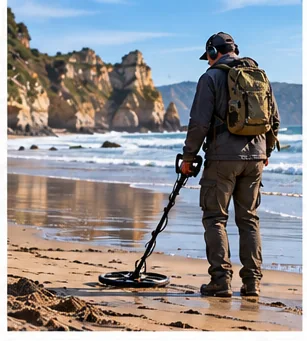
A winter beach can be worth hunting after a storm, because waves can strip sand and expose layers that summer cover hides. The price is cold water, hard-to-read surf and debris, so dress for wind and spray, match your gear to how deep you wade, and plan around an official tide and surf forecast.
In This Guide
Affiliate disclosure: We may earn a commission from qualifying purchases made through links on this page, at no extra cost to you.
Why the winter beach is different
Summer beaches are crowded and the sand is deep and soft. Winter beaches are quieter, and storms can rearrange them in a night. Waves and wind move sand around, and a beach that was flat and thick with sand in August can be cut back, steeper and scoured in January. Many hunters watch for this because a stripped beach puts more of what lies under the sand within reach of the coil and the scoop.
That is the appeal, and it comes with a price: cold water, cold wind and surf that is harder to read. The right preparation is partly about finds and mostly about staying warm, dry and safe. Our guide to detectors for the beach covers the machine side, and this post covers the season.
Cold-water gear: what to wear
The wind and spray matter as much as the water, and wet cotton clothing is a poor choice anywhere near the surf. Dress in layers that keep their warmth when damp, and put a waterproof shell on top. Beyond that, what you wear depends on how deep you plan to wade.
| How you will hunt | Gear to consider | Watch for |
|---|---|---|
| Dry sand and the wrack line only | Waterproof boots, warm socks, a shell, gloves and a hat | Spray and surprise waves reaching your boots; salt on your gear |
| Ankle to knee wading | Chest or hip waders over warm layers, or insulated rubber boots | Waders fill if you fall; a belt and a snug fit help; check seams and boots for leaks |
| Deeper wading or swash zone | Waders with a belt, neoprene gloves and a way to signal for help | Cold water, undertow and wave surges; do not wade beyond your comfort or the conditions |
| Winter water hunts generally | Local advice, a buddy and a conservative plan | Not worth it in rough surf or on an empty beach |
Neoprene gloves and insulated hats earn their place, but check that you can still feel the controls and keep hold of the scoop. Our detecting boots guide goes through footwear in more detail.
Keep a dry spare layer, dry socks and a towel in the car. After an hour in wind, hands and feet slow down, and a change of dry clothes is cheap insurance for the drive home.
After a storm: where hunters look
There is no secret formula, and storms differ, but a few patterns come up often when hunters talk about post-storm beaches:
- Cut banks and scarps: a steep step in the sand where waves have bitten into the beach. The face can show layers that were buried before the storm. Do not stand under an overhanging edge or dig into it, because it can slump.
- The wrack line: the line of seaweed, shells and debris that marks the highest wash. It is also where sharp or heavy debris lands.
- Coarser material: areas where waves have left shells, gravel or cobbles can mark where lighter sand was carried away.
- Low spots and runnels: channels where water drains back to the sea, which can hold heavier objects.
Walk the beach once before you swing the coil. Note where the sand has been cut, where the new debris line sits and where you can retreat if the tide returns. A look from higher ground saves time, and it shows hazards you would miss from the waterline. Work a slow grid across the best-looking stretch rather than hopping between patches.
The conditions change with each tide, so a spot that looks promising at one hour can be covered or re-buried at the next. Go with an open mind, watch the changes and be willing to leave.
Tides, surf and timing
Surf after a storm can be bigger and more powerful than it looks. Use an official local forecast for tide, surf and wind, and plan your session around the lowest part of the tide with room to leave. Do not turn your back on the water while you are working at the edge, and never wade out on a falling tide that could strand you. If you are hunting alone, tell someone where you are and when you expect to finish, and keep your phone in a waterproof pouch inside a warm pocket.
Storm debris is a hazard in its own right. Broken glass, fishing line, hooks, nails, and pieces of wood with exposed fasteners all wash up on beaches. Wear sturdy boots and gloves, and carry a pouch that closes. Our pouch and harness guide covers carrying options.
Gear for a cold, wet beach
A stainless or aluminum scoop with holes sized for the sand you hunt is standard beach equipment, and a waterproof pinpointer saves time in wet sand. The beach gear guide and wet sand pinpointer guide go through the options. Check your detector manual for what is waterproof and what depth of water the machine can handle, since the coil, control box, connectors and headphones can all have different limits. Our cold-weather battery guide covers the battery side.
Beach sand scoop
Pick a scoop with a handle you can grip with gloves, and a hole size that suits the sand where you hunt. Choose a rust-resistant material.
Waterproof pinpointer lanyard or holster
A lanyard or holster stops you losing a pinpointer in the surf. Check that it fits your model.
After the hunt: salt and rinse
Salt water and cold air are hard on equipment. Rinse the coil, lower shaft, scoop and pinpointer with fresh water as soon as you can, wipe them dry and let everything air out before storing it. Check the manual for what your machine can safely be rinsed with, and follow the maker's care steps for connectors and the headphone port. Our care guide covers the post-beach rinse in more detail.
Check the rules for winter beaches
Many beaches have dune areas, protected wildlife zones and seasonal restrictions, and some closures take effect in the cold months. Rules vary by beach, by state and by who manages the land. Confirm with the managing agency, parks office or local government before you hunt. See our laws and etiquette guide for a general starting point. It is not legal advice.
Bottom line
A winter beach can offer scoured sand and thin cover, but the surf, cold and debris are the real risk. Dress for wind and spray, choose gear to match how deep you will wade, plan around the tide using an official forecast, rinse everything afterwards and confirm beach rules before you go.
Frequently Asked Questions
Is winter a good time to metal detect on the beach?
It can be. Storms and surf can strip sand and expose deeper layers, but cold water and rough surf are real hazards. Plan for both.
What should I wear to detect a beach in cold weather?
Wear layers that keep their warmth when damp and a waterproof shell. Add waterproof boots or waders if you will wade, plus gloves and a hat. Avoid wet cotton.
Where do hunters look after a storm?
Many look at cut banks, the wrack line, areas of coarser material and low channels where water drains. Stay clear of overhanging edges, which can slump.
How do I stay safe in winter surf?
Use an official local forecast for tide, surf and wind, plan around low tide, do not turn your back on the water and tell someone your plan. Do not wade beyond your comfort or the conditions.
Do I need to rinse my gear after a winter beach hunt?
Yes. Rinse salt off the coil, shaft, scoop and pinpointer with fresh water, wipe them dry and let them air out. Follow your manual for connectors and ports.
Sources and verification
This guide is general gear and safety advice and quotes no tide, temperature, water-depth or waterproof-rating figures. Storm patterns described here are common talking points among hunters, not research findings.
Use an official local forecast for tide, surf and weather, confirm beach rules with the managing agency, and check your detector manual for waterproof limits and rinse instructions.
DetectorGear.co is a participant in the Amazon Services LLC Associates Program and the eBay Partner Network. When you purchase through links on this page, we may earn a commission at no additional cost to you. Affiliate relationships do not influence our editorial recommendations. Learn more.