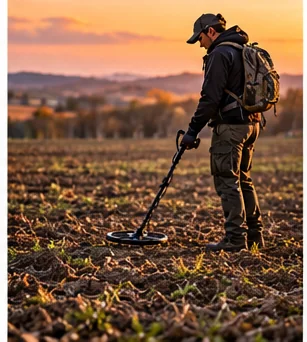
The best metal detecting boots have a firm sole for pushing a shovel, waterproofing that fits the wet you hunt in, enough room for warm socks, and no steel parts that ring on the coil. Waterproof, insulated and digging-ready is the target; comfort over a long, slow hunt is the test.
In This Guide
Affiliate disclosure: We may earn a commission from qualifying purchases made through links on this page, at no extra cost to you.
Why boots are detecting gear, not just footwear
A detectorist's boots do more work than a hiker's. You stand still for long stretches, you kneel in wet grass, you plant a shovel and press it into the ground with your foot, and you carry a swinging detector across uneven ground. Footwear that is fine for a walk can be miserable after two hours of this. The best detecting boots are waterproof enough for wet fields, warm enough to stand still in, stiff enough under the arch to push a shovel, and free of metal that confuses the coil.
Sole stiffness: the digging test
Pushing a shovel blade into the ground with the ball or arch of your foot is a daily action in field and relic hunting. A flexible, soft sole bends around the shovel's edge and the foot takes the pressure, which hurts quickly. A firmer midsole spreads the load. When you try boots on, flex them: they should bend at the ball of the foot but resist twisting and folding in the middle. A tread that clears mud and gives grip on wet grass and slopes matters too, because slipping with a detector in your hands is a good way to damage a coil.
If you mostly use a hand digger on soft ground, stiffness matters less. If you use a full-size shovel, it matters a lot. Our digging tool guide explains which tools suit which soils.
Waterproofing: membrane, rubber or neoprene
Wet feet end a hunt, and dew-soaked fields, muddy farmland and shallow water are all common. The main options differ in how they handle moisture.
| Boot type | Good for | Watch for |
|---|---|---|
| Waterproof leather or fabric with a membrane | General field, park and woodland hunting | Seams and cuffs can leak in deep water; breathability varies |
| Rubber boots | Wet farm fields, mud and shallow puddles | Little insulation or arch support unless stated; can be hot and clammy |
| Neoprene or insulated rubber boots | Cold, wet ground and shallow water | Often bulkier; check sole stiffness for digging |
| Wading boots or waders | Hunting in shallow or deeper water | Different fit and grip, not a general field boot |
Check the maker's description for what "waterproof" covers: the upper, the seams, the tongue. A boot that is waterproof up to the ankle will still fill if you step into a deeper puddle.
Insulation and warmth
Detecting is low-intensity, so feet tend to be colder than they would be on a hike. Insulation levels are labeled differently by different makers, and temperature ratings in particular are not standardized across brands, so compare the maker's description with your own experience and the conditions you hunt in. A simple approach is to buy for the cold you actually face, and add warmth with the sock system rather than a tight boot.
Fit matters as much as insulation. A boot that squeezes your foot reduces circulation and gets colder. Leave room for a warm sock and for toes to move. Choose socks made from wool or a synthetic blend, and avoid cotton, which holds moisture. For the rest of the cold-weather kit, see our cold weather gear guide.
Waterproof insulated boots
Check the sole stiffness, the height of the waterproof section and the fit with a warm sock. Read the description of what is insulated.
The metal-in-your-boots problem
Your detector's coil does not know the difference between a buried coin and a steel shank in your boot. Steel toes, steel shanks, metal eyelets and hooks can all produce signals when the coil comes near your feet, especially when you swing wide or cross your legs. Before you buy, check whether the boot has a steel toe or steel shank, and test the boots on your detector at home. Some boots use composite or non-metallic parts, which tend to be quieter. If your boots do produce signals, keep the coil away from your feet and adjust your swing. Our false signal guide covers other sources of unwanted signals.
Socks, insoles and care
- Socks: carry a spare pair in the car. Dry socks are the quickest way to restore comfort after a wet hike.
- Insoles: a cushioned insole can help on long days. Check that it does not make the boot too tight.
- Drying: remove insoles and let boots dry at room temperature after a wet hunt. Avoid placing them directly against a heater, which can damage materials. Follow the maker's care instructions.
- Cleaning: brush off soil, and rinse salt after beach use, as it can corrode metal parts and stiffen materials.
Wool-blend hiking socks
A warm, non-cotton sock is one of the cheapest comfort upgrades. Size it for your boot with room to wiggle your toes.
How to choose
Try boots on late in the day when feet are a little larger, wearing the socks you will use in the field. Flex the sole, check for metal parts and think about the ground you hunt most. For wet fields, lean toward waterproof, grippy and a bit stiffer. For general parks and woodland, a waterproof hiking-style boot is a good start. Pair them with knee protection from our gloves and knee protection guide and you have the lower half of a working kit. For fall field hunting specifically, see why harvested fields are so popular, and plan for mud.
Bottom line
Choose boots with a firm sole for pushing a shovel, waterproofing that suits the wet you actually meet, enough room for warm socks and no steel parts that ring on your coil. Try them with a flex test and a swing test at home before you commit.
Frequently Asked Questions
What kind of boots are best for metal detecting?
Waterproof boots with a firm sole, a grippy tread, room for warm socks and no steel parts are a good fit for most hunts. Wet farm fields may call for rubber or insulated rubber boots.
Can steel-toe boots interfere with a metal detector?
Yes. Steel toes, shanks and metal eyelets can produce signals when the coil swings near your feet. Test your boots at home and keep the coil away from your feet.
Do I need insulated boots for metal detecting?
If you hunt in cold weather, probably. Detecting is low-intensity, so feet get cold. Insulation labels vary by maker, so compare the description with your conditions.
Are rubber boots good for metal detecting?
They are good for wet, muddy fields, but they can lack arch support and insulation unless stated. Check the sole stiffness if you push a shovel with your foot.
How should I dry my boots after a hunt?
Remove the insoles and let the boots dry at room temperature. Follow the maker's care instructions and avoid direct heat.
Sources and verification
This is general gear advice and quotes no manufacturer specifications. We did not review specific boots, and insulation and waterproofing claims differ by maker.
Check the maker's description for waterproof coverage, insulation and care instructions, and test boots on your own detector for metal signals before relying on them in the field.
DetectorGear.co is a participant in the Amazon Services LLC Associates Program and the eBay Partner Network. When you purchase through links on this page, we may earn a commission at no additional cost to you. Affiliate relationships do not influence our editorial recommendations. Learn more.