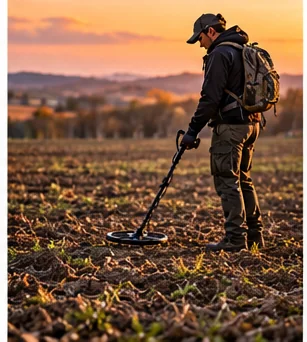
To detect comfortably in cold weather, dress in layers, wear thin grippy gloves you can still work in, add a warmer outer pair or hand warmers, and keep your feet and head covered. The goal is warmth without bulk that makes the controls, pinpointer and digging tool hard to use.
In This Guide
Affiliate disclosure: We may earn a commission from qualifying purchases made through links on this page, at no extra cost to you.
The cold-hunt problem: warm enough, but still able to work
Metal detecting is slow, low-effort movement. You swing steadily, stop, kneel, dig and swing again, so your body does not generate much heat, and your hands, which do the fine work, get cold first. The challenge is staying warm without bulk that makes the controls, the pinpointer and the digging tool hard to use. The answer is usually layers on the body, thin and grippy gloves on the hands, and a way to rewarm quickly.
A note on safety: use your own judgment about when it is too cold to be out, check the forecast, tell someone where you are going and pack a way to warm up. This guide covers gear, not medical advice.
Layers: the base of the system
Dress in three layers: a moisture-wicking base layer, an insulating middle layer, and a wind-resistant outer shell that sheds light rain or snow. Avoid cotton against the skin, since it holds moisture and cools you down once you stop moving. Pick an outer layer with room to bend and kneel without pulling at the shoulders, and pockets you can reach while holding a detector.
- Base layer: a snug synthetic or wool layer that moves moisture away from skin.
- Middle layer: fleece or similar insulation that traps warm air without much weight.
- Outer layer: a shell that blocks wind. Check that the sleeves cover your wrists when you are swinging.
- Lower body: long underwear and trousers that stay put when you kneel, ideally with water resistance at the knees.
Gloves: the dexterity test
Gloves decide whether you can keep going. Thick insulated gloves are warm but can make it hard to press the buttons on a pinpointer, move the detector's controls or hold a hand digger. Thin gloves keep dexterity but cool fast. Many hunters solve this with two pairs: a thin liner for fine work and a warmer outer glove or mitt for the swing.
- Check the grip. Smooth fabric slides on a shovel or a handle.
- Test the buttons. Operate your detector and pinpointer controls wearing the gloves before the hunt, at home.
- Check the cuff. A cuff that seals around the sleeve stops wind getting in when your arm is extended.
- Consider water resistance. Wet gloves lose warmth quickly, so a water-resistant palm helps in damp soil or snow.
Our guide to gloves and knee protection covers more about protection and fit.
Insulated work gloves with grip
Look for a sturdy palm and a cuff that closes. Test your pinpointer buttons in them before relying on them in the field.
Hand warmers: how to use them well
Disposable hand warmers are a convenient emergency heat source. Keep a few in a jacket pocket or inside a glove, but read the package warnings first, especially about direct skin contact and about use by people who cannot feel heat. Place them against a layer rather than bare skin unless the package says otherwise. Do not rely on them as the only source of warmth, and carry extras for a longer hunt. Reusable warmers are an option for people who prefer to avoid waste; follow the maker's instructions for those too.
Hand warmers
Check the package for use instructions and warnings, and carry spares for longer hunts.
Feet, head and the rest
Cold feet end a hunt faster than cold hands. Wear a warm, non-cotton sock system and boots with enough room to avoid squeezing the foot, which reduces circulation. Add a hat that you can wear with your headphones; thin ones work best under over-ear headphones. A neck gaiter is a small item that does a lot. If you kneel, a kneeling pad or knee protection keeps cold ground off your legs.
Cold and your detector
Batteries do not like the cold, and runtime can drop in low temperatures. Carry spares in an inside pocket and check your manual for the temperature range your detector is designed for. Wipe off snow and moisture before you put the machine away so it is dry the next time you use it. Our care guide covers post-hunt maintenance, and the battery and charging guide has more on power planning. For a pinpointer that works well with gloves, look at the pinpointer guide and pay attention to the button size.
Cold-hunt checklist and a simple plan
| Item | Why it matters | What to check |
|---|---|---|
| Base and mid layers | Keep the core warm while you move slowly | Avoid cotton, allow room to kneel |
| Gloves, thin plus warm | Dexterity for controls and digging | Button test, grip and cuff |
| Hand warmers | Quick rewarming | Package warnings, spares |
| Warm socks and boots | Cold feet end hunts early | Room for circulation, no tight fit |
| Hat or headband, neck gaiter | Keeps heat in without blocking audio | Fit under headphones |
| Spare batteries | Cold can shorten runtime | Right size and type, carried warm |
| Kneeling pad | Keeps the cold ground off your knees | Waterproof surface |
Start with the forecast and wind, because wind makes a bigger difference than the temperature on the thermometer. Keep your first session short, near the car, and see how your gear works together. Carry a hot drink, extra gloves and a dry layer. Dig where you are allowed to, and remember that frozen ground is harder to dig and harder to restore. If the ground is hard or frozen, ask the land owner or manager what is acceptable before you start, and consider waiting for a thaw.
Bottom line
Dress in layers, use thin gloves you can work in plus a warmer outer pair, carry hand warmers and spare batteries, and keep your feet and head covered. Test every control with gloves on at home before you rely on them in the field.
Frequently Asked Questions
What gloves are best for metal detecting in cold weather?
A thin grippy liner for fine work with a warmer outer glove or mitt for the swing is a common combination. Test your pinpointer and detector controls with the gloves on before the hunt.
How do I keep my hands warm while metal detecting?
Use layers on the body, a glove system, and hand warmers in a pocket or glove. Read the package warnings on warmers and take breaks to rewarm.
Do metal detector batteries die faster in the cold?
Cold can reduce battery runtime, usually temporarily. Carry spares in an inside pocket and check your detector manual for its operating temperature range.
Can I use hand warmers while detecting?
Yes, typically in a pocket or inside a glove, but follow the package instructions and avoid prolonged direct contact with skin.
Is it okay to detect in frozen ground?
It is possible, but frozen ground is hard to dig and harder to restore. Check the land owner or manager's rules before you dig, and consider waiting for a thaw.
Sources and verification
This is general cold-weather clothing and gear advice. We did not test specific gloves or hand warmers, and no manufacturer specifications are quoted.
Follow the instructions and warnings on any hand warmer package, confirm your detector's operating temperature range in its manual, and check the land manager's rules before digging.
DetectorGear.co is a participant in the Amazon Services LLC Associates Program and the eBay Partner Network. When you purchase through links on this page, we may earn a commission at no additional cost to you. Affiliate relationships do not influence our editorial recommendations. Learn more.