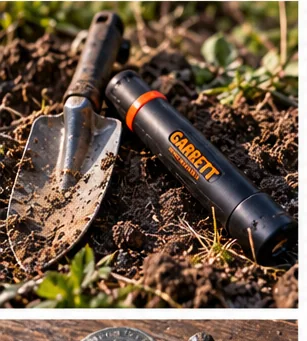
Products and configurations to compare
Coiled pinpointer lanyard
Bright and cheap.
Best when: tall grass and water hunting
Watch for: can snag on brush
Retractable pinpointer tether
Keeps line managed.
Best when: you dislike loose coils
Watch for: retractor must be strong enough
Universal pinpointer holster
Simple belt carry.
Best when: factory holster is worn/lost
Watch for: diameter fit varies
Attach to the pinpointer's designed loop
Do not improvise around battery caps.
Bright color helps recovery
Orange or fluorescent tether is easy to spot.
Retraction force should be gentle
Too strong makes pinpointing annoying.
Rinse saltwater hardware
Small clips corrode quickly.
Holster position matters
Place where you can return the tool one-handed.
Recovery gear should make holes smaller and faster
The detector finds the area; the recovery system finds and removes the target cleanly. A pinpointer, appropriate digging tool, finds pouch and optional probe work together. Better recovery gear protects lawns, saves time and reduces the chance of scratching coins or jewelry.
Park turf and farm fields need different tools. A narrow hand digger and probe are ideal where neat plugs matter. A long T-handle shovel is efficient in open relic fields. Beaches reward a scoop that drains sand quickly and resists salt corrosion.
Every tool should have a retention plan
Pinpointers and hand diggers are easy to leave beside a hole. A bright lanyard, holster or belt sheath is cheap insurance against losing a $100 tool in tall grass.
Before checkout
- Accessory is compatible with the exact detector model
- Coil connector and firmware support are confirmed
- Waterproof rating matches the actual depth/use
- Wireless audio is low-latency enough for detecting
- Digging tool matches turf, field or beach conditions
- Finds pouch separates sharp trash from keepers
- Recovery tools have holsters or lanyards
- Saltwater gear can be rinsed and dried
- Added weight remains comfortable for multi-hour hunts
- The purchase solves a repeated field problem rather than duplicating existing gear
Buy the accessory that fixes the next hunt
Metal detecting gear is easy to overbuy because almost every accessory is cheaper than the detector. Before ordering, name the field problem in one sentence: “I lose targets in park trash,” “my scoop is exhausting in wet sand,” “my headphone cable snags,” or “the M15 makes my arm tired.” If the product does not fix that sentence directly, leave it in the cart.
Compatibility is the second filter. Detector families use model-specific coils, audio systems and waterproof connectors. Search by exact model and part family, not just brand. A Minelab accessory can still be wrong for another Minelab platform.
First-hunt test
Use new gear on a familiar site. Compare recovery speed, swing fatigue or audio timing against your old setup. Change one thing at a time so you know whether the new coil, headphones or harness actually helped. For beach gear, rinse and inspect it immediately after the first saltwater session to find corrosion-prone fasteners while the return window is still open.
The best accessories disappear into the routine. The target, site and permission should remain the interesting part.
Frequently asked questions
Does Garrett Pro-Pointer AT have a lanyard loop?
Yes, Garrett lists one.
Retractor or coil?
Retractor is cleaner; coil is simpler and often more rugged.
Can the tether affect waterproofing?
Not when attached to the intended loop.
Worth it?
Very, given the price of the tool.
Current product/source checks
Affiliate disclosure: DetectorGear.co participates in the Amazon Associates program and eBay Partner Network. We may earn from qualifying purchases at no extra cost to you. Amazon links use scouttheory-20; eBay links use campaign 5339137014.